Showing posts with label Wall Street. Show all posts

Saturday

Wall Street dips after worldwide slide; gold nears record


NEW YORK (AP) — Wall Street is slipping on Friday after tensions ramped higher between the world’s two largest economies, though the market pared its losses as the morning progressed.

The S&P 500 was 0.4% lower in midday trading, which would wipe out the last of its gains for the week. The Dow Jones Industrial Average was down 118 points, or 0.4%, at 26,534, as of 11:30 a.m. Eastern time, and the Nasdaq composite was down 0.5%. Each of the indexes had been down more sharply in the morning, with the Nasdaq off by as much as 2.3%.

Stocks also sank across Asian and European markets, and all the uncertainty helped gold top $1,900 per ounce, close to its record high. Treasury yields were holding relatively steady, but they remain close to their lowest levels since April.

The coronavirus pandemic remains the most dominant force in markets, with its potential to destroy lives and economies. But other risks are also bubbling up, headlined by Friday’s worsening relations between the United States and China.

Investors are also concerned about a recent uptick in layoffs as spiking coronavirus counts across the Sun Belt lead more businesses to shut down. Extra benefits for those out-of-work Americans from the federal government are set to expire soon, and worries are rising about whether Congress can reach a deal on more aid for the economy. Nearly half of Americans whose families experienced a layoff during the pandemic believe those jobs are lost forever, according to a poll from The Associated Press-NORC Center for Public Affairs Research.

Despite all those challenges, the S&P 500 remains only about 5% below its record set in February, after roaring back from an earlier, nearly 34% plummet. This week’s stall for the S&P 500 follows three straight weekly gains driven by hopes that the economy was regaining its footing. Underlying it all is massive aid for the economy promised by the Federal Reserve, including record-low interest rates.

“The Fed is the big story behind this market, that and the liquidity it’s provided,” said Teresa Jacobsen, managing director at UBS Private Wealth Management. “It gives a great deal of support for upside in the market. But, there are momentary blips when we pause and give a little back.”

On Friday, the blip came after China’s Foreign Ministry ordered the closure of the U.S. consulate in the western city of Chengdu. It echoes a similar move earlier this week by the United States to close the Chinese consulate in Houston.

Such moves have investors on edge because of how viciously markets swung in prior years when President Donald Trump was pressing his trade war with China, before they agreed to a temporary truce early this year.

“Alongside the eviction of the Houston Chinese Consulate, the risk of the U.S.-China conflict escalating into a ‘Cold War’ is worrying,” said Hayaki Narita of Mizuho Bank.

A speech Thursday by U.S. Secretary of State Mike Pompeo saying that “securing our freedom from the Chinese Communist Party is the mission of our time” adds to the rhetoric certain to incense Beijing, making it still more difficult for either side to back down, he said.

Technology stocks have also been in the spotlight, after a sharp slide for them on Thursday helped drag the S&P 500 to its worst loss in nearly four weeks.

Microsoft, Apple, Amazon and other giants have cruised through much of the pandemic on expectations that they can keep growing despite all the challenges for the economy. But critics say enthusiasm for them was overdone, with prices too high even after accounting for the huge profits that they can produce

Apple slipped 0.6%, Microsoft dropped 0.2%, and tech stocks as a group accounted for roughly half of the S&P 500’s loss. Earlier in the morning, Apple had been down 4%, and tech stocks were responsible for two thirds of the S&P 500′s drop.

Intel sank 15.3% after it delayed the release of its new 7 nanometer chip, and it was the biggest weight on the market Friday morning.

Earlier in the day, stocks in Shanghai sank 3.9%, while the Hang Seng in Hong Kong lost 2.2%. Elsewhere in Asia, South Korea’s Kospi fell 0.7%.

In Europe, France’s CAC 40 fell 1.5%, and Germany’s DAX lost 1.9%. The FTSE 100 in London dropped 1.3%.

The yield on the 10-year Treasury held steady at 0.58%. It tends to move with investors’ expectations for the economy and inflation.

Gold rose 0.5% to $1,900.30 per ounce, crossing above that threshold for the first time in nearly nine years. Benchmark U.S. crude slipped 14 cents to $40.93 per barrel. Brent crude, the international standard, lost 10 cents to $43.21 per barrel.

AP Business Writer Elaine Kurtenbach contributed.

The Associated Press

Wednesday

Wall Street hits the brakes after strong, weekslong rally


Wall Street hit the brakes Tuesday, a day after its remarkable, weekslong rally brought the S&P 500 back to positive for the year and the Nasdaq to a record high.

The S&P 500 was down 0.9% in midday trading, after earlier being down as much as 1.2%. The Dow Jones Industrial Average was down 283 points, or 1%, to 27,281, and the Nasdaq composite was up 0.1%.

Skeptics have been saying for weeks that Wall Street’s huge rally, which reached 44.5% between late March and Monday, may have been overdone. The economy has given glimmers of hope that the recession could end relatively quickly as governments lift their lockdown orders, but the stock market has been soaring much more quickly than the economy and corporate profits are expected to.

“We’re seeing a little bit of a pause and a little bit of a reversal,” said Bill Northey, senior investment director at U.S. Bank Wealth Management. “Some of that is an appropriate reconciliation with the pace for the restart.”

IMPACT ON THE ECONOMY:

– Medicaid rolls swell in New Mexico amid economic turmoil
– A US recession began in February in the face of coronavirus
– Virus tourism impact gives Maui state's top jobless rate

In another sign of increased caution, the yield on the 10-year Treasury yield fell to 0.81% from 0.88% late Monday. It tends to move with investors’ expectations of the economy and inflation, though it’s still well above the 0.64% level where it started last week.

European stock markets were also lower. Germany’s DAX lost 1.4% after the country reported that its exports fell by a quarter in April. France’s CAC 40 slid 1.5%, and the FTSE 100 in London dropped 2.1%.

Asian markets were mixed. Japan’s Nikkei 225 slipped 0.4% after the government reported that wages fell in April as the country widened precautions to fight the coronavirus pandemic, which caused some businesses to close or limit their operations. But the Hang Seng in Hong Kong rose 1.1% and South Korea’s Kospi added 0.2%.

Wall Street has been generally rising since late March, at first on relief following emergency rescues by the Federal Reserve and Congress. More recently, investors have begun piling into companies that would benefit most from a reopening economy that’s growing again.

Banks, airlines, energy companies and others whose profits need the economy to get closer to normal have been leading the way in recent weeks. They got a big boost on Friday when the government said that employers surprisingly added jobs to their payrolls last month, a sign that the economy could pull out of the recession that began in February relatively quickly.

But such companies went into reverse on Tuesday. American Airlines and Alaska Air Group both fell more than 9% for some of the sharpest losses in the S&P 500, a day after they were near the top of the leaderboard.

Stocks in the energy, financial and industrial sectors fell more than the rest of the market, also mirroring their performance from a day before. Technology and communication services companies rose.

Smaller stocks also pulled back following a furious run. The Russell 2000 index of small-cap stocks fell 2.1%, after a 10.2% rally in a little more than a week.

Skeptics of the rally have been saying that many risks still lurk ahead on the long road to a full recovery. Chief among them is the possibility of a second wave of coronavirus infections, which could lead states across the country and nations around the world to tighten up on lockdown measures that could again choke the economy. Plus, one month of improving jobs data does not necessarily mean a trend.

The next big milestone for markets is coming Wednesday, when the Federal Reserve announces its decision on monetary policy following a two-day meeting. The Fed’s promise of immense, unprecedented amounts of aid helped stocks begin their rally, and investors want to see what their reaction will be to the recent upturn in jobs numbers.

___

AP Business Writer Yuri Kageyama contributed.

The Associated Press

Monday

Asian shares rise after buying mood on Wall Street ends week


TOKYO – Asian shares were mostly higher Monday cheered by a buying mood on Wall Street that came at the end of last week.

Japan’s benchmark Nikkei 225 edged up 0.3% in early trading to 23,414.51, while Australia’s S&P/ASX 200 added 0.2% to 6,722.90. South Korea’s Kospi edged up 0.3% to 2,088.76. Hong Kong’s Hang Seng lost earlier gains to inch down 0.2% to 26,451.16. The Shanghai Composite index fell 0.2% to 2,906.42.

“Markets were mostly higher on the solid U.S. jobs data print,” said Vishnu Varathan of the Asia & Oceania Treasury Department at Mizuho Bank in Singapore, adding that questions remained on whether would prove enough amid other global risks.

The surprisingly strong U.S. jobs report had put investors in a buying mood on Wall Street, extending the market’s winning streak to a third day.

The rally pushed the Dow Jones Industrial Average up by more than 300 points and erased the S&P 500’s losses from earlier in the week, nudging the benchmark index to a second consecutive weekly gain.

The Labor Department said employers added 266,000 positions, well above estimates of 184,000. The report also showed unemployment falling to a 50-year low. Separately, an index that measures how consumers feel about the economy showed an increase from last month.

The S&P 500 rose 28.48 points, or 0.9%, to 3,145.91. The index posted a 0.2% gain for the week, a solid pivot from losses of more than 1% as of late Thursday. It’s now within 0.3% of its all-time high set on Nov. 27 and up 25.5% so far this year.


The latest gains also helped stem some of the losses for the Dow and Nasdaq.

The Dow climbed 337.27 points, or 1.2%, to 28,015.06. The Nasdaq gained 85.83 points, or 1%, to 8,656.53. The Russell 2000 index of smaller company stocks picked up 19 points, or 1.2%, to 1,633.84.

Friday’s batch of encouraging economic data capped what started as a rough week for the market.

Increased trade tensions and disappointing economic reports — including data showing manufacturing continues to shrink, and growth in the service sector is slowing — dragged the market to steep losses on Monday and Tuesday.

The latest employment report and consumer sentiment data are a welcome development as steady job growth has been one of the bright spots in the economy, along with solid consumer spending.

Investors also got some encouraging news on the U.S.-China trade front, with Beijing saying Friday that it is waiving punitive tariffs on U.S. soybeans and pork as negotiations for a trade deal continue.

ENERGY:

Benchmark crude oil

It rose 77 cents to $59.20 a barrel on Friday.

Brent crude oil, the international standard, gained $1 to close at $64.39 a barrel.

CURRENCIES:

The dollar fell to 108.59 Japanese yen from 108.69 yen on Friday. The euro weakened to $1.1055 from $1.1107.

source: business.inquirer.net

Wednesday

Asian shares track Wall Street losses on weak US factory data


BANGKOK – Asian shares are lower after U.S. stocks posted their worst loss in five weeks on Wednesday after a surprisingly limp report on the nation’s manufacturing that stirred worries about the economic outlook.

Japan’s Nikkei 225 index shed 0.6% to 21,758.02 while the Hang Seng in Hong Kong lost 0.4% to 25,980.37. Sydney’s S&P ASX 200 gave up 1.3% to 6,658.20.

The Kospi in South Korea sank 1.4%, to 2,044.01 after North Korea fired a ballistic missile toward the sea Wednesday, South Korea’s military said, in a display of its expanding military capabilities hours after saying it would resume nuclear diplomacy with the United States this weekend.

The report showed that manufacturing weakened in September for the second straight month as President Donald Trump’s trade war with China dragged on confidence and factory activity. It dashed economists’ expectations that August’s contraction had been an aberration, and stocks and bond yields immediately reversed course to drop sharply lower following the report.

The S&P 500 slumped 1.2% to 2,940.25 for its sharpest loss since August. The Dow Jones Industrial Average fell 1.3% to 26,573.04, and the Nasdaq composite dropped 1.1% to 7,908.68.

Small-company stocks fell more than the rest of the market. The Russell 2000 index lost 2%, to 1,493.43.


In the bond market, the yield on the 10-year Treasury dropped to 1.66% from 1.74% before the report’s release, which is a big move. Three stocks fell for every one that rose on the New York Stock Exchange, and gold climbed as investors sought safer ground.

Economists had been expecting growth to resume in September, and they had forecast a reading of 50.4, according to FactSet.

Manufacturers say global trade remains the most significant issue, and all the uncertainty caused by the trade war is hurting exporters in particular. Businesses are unsure what the rules of international trade will be, and it’s causing CEOs to pull back on their spending plans. In a separate report, the World Trade Organization said global trade growth will slow to its weakest pace this year since 2009.

“The disappointing data is only fanning long-standing fears of slowing global growth,” said Alec Young, managing director of Global Markets Research at FTSE Russell.

Manufacturing is a relatively small part of the economy, but investors worry about whether it will spill into other areas. That puts an even bigger spotlight on Friday’s jobs report, which economists expect to show an acceleration in hiring.


Household spending has been a pillar for the economy, particularly when manufacturing and business spending are under threat, and a strong job market helps households keep spending. But uncertainty is looming even there.

A report last week showed that consumer spending rose less than economists expected in August. Two reports on consumer confidence last week gave a mixed picture, with one falling below expectations and the other rising above.

Last month’s jobs report was also surprisingly weak, but that may have been a one-off, some analysts say.

“The month of August over the last 10 years has been the wonkiest jobs report of the year,” said Philip Orlando, chief equity market strategist at Federated Investors. It often falls below expectations, only for the numbers to be revised higher in subsequent months, he said.

“There’s no question the data has been softer, slower, weaker, pick your adjective for today versus a year ago,” Orlando said about the broad economy. “But I do think we’re going to get through this.”

The Fed and other central banks around the world have been aggressive in keeping rates low to shield against the effects of the trade war and slowing global economic growth. The Fed lowered short-term rates twice this summer, down to a range of 1.75% to 2%, the first cuts since the financial crisis was toppling economies around the world in 2008.

Benchmark crude oil rebounded, gaining 56 cents to $54.18 per barrel in electronic trading on the New York Mercantile Exchange. It fell 45 cents to $53.62 a barrel on Tuesday. Brent crude oil, the international standard, picked up 41 cents to $59.30 per barrel.

The dollar rose to 107.87 Japanese yen from 107.73 yen on Tuesday. The euro strengthened to $1.0937 from $1.0934. /gsg

source: business.inquirer.net

Thursday

US Stock Market Experienced Gains After Impeachment Probe


Wall Street stocks were mixed early Wednesday, with Nike and Boeing gaining, as investors took a wait-and-see approach to a congressional impeachment investigation of President Donald Trump.

The anticipation of the impeachment probe was a factor in the stock market’s retreat on Tuesday.

But the US stock market and investors appeared to be taking the news in stride after House Democratic Leader Nancy Pelosi formally announced the probe.

Wednesday’s flattish early trading “suggests that the market isn’t going to allow itself to get too worked about the inquiry at this stage of matters when the headlines are heavy but the tradable facts of import are light,” analyst Patrick O’Hare wrote at Briefing.com.

About 20 minutes into trading, the Dow Jones Industrial Average stood at 26,841.85, up 0.1 percent.

The broad-based S&P 500 was essentially flat at 2,965.68, while the tech-rich Nasdaq Composite Index had shed 0.2 percent at 7,978.90.


Among individual companies, Dow member Nike surged 5.2 percent after reporting better-than-expected quarterly profits on strong direct sales and higher revenues from China.

Boeing also added to the Dow’s gains, advancing 0.6 percent as it announced a number of reforms to its board and corporate structure to highlight safety concerns after two crashes led to 346 fatalities and the grounding of its popular 737 MAX plane.

Philip Morris International jumped 5.9 percent as it and Altria called off a potential $200 billion merger following a sudden surge in worries about vaping.

Altria, which holds a major stake in e-cigarette company Juul, gained 0.5 percent.

source: usa.inquirer.net

Tuesday

Asian shares mixed as investors look ahead to rate decisions


TOKYO – Asian shares were mixed Tuesday after a day of listless trading on Wall Street, as investors awaited signs on global interest rates.

Japan’s benchmark Nikkei 225 added 0.2% to 21,360.15 in morning trading.

Australia’s S&P/ASX 200 fell 0.5% to 6,618.20, while South Korea’s Kospi inched up 0.1% to 2,021.73.

Hong Kong’s Hang Seng was up nearly 0.1% at 26,703.44, while the Shanghai Composite lost 0.4% to 3,012.03.

On Wall Street, the S&P 500 ended virtually flat as losses in technology and health care stocks outweighed gains in financials and other sectors. The Russell 2000 index of smaller company stocks, which has lagged the S&P 500 this year, outpaced the rest of the market.

Investors are taking a shine to smaller company stocks in hopes that they’ll be better shielded from the fallout of the costly trade war between the U.S. and China than large multinationals.


The S&P 500 inched 0.28 points lower, or less than 0.1%, to 2,978.43. The index, which has finished higher the past two weeks, is within 1.6% of its all-time high set in late July. The Dow Jones Industrial Average rose 38.05 points, or 0.1%, to 26,835.51. The Nasdaq fell 15.64 points, or 0.2%, to 8,087.44. The Russell 2000 climbed 19.06 points, or 1.3%, to 1,524.23.

The broader market has bounced back the past two weeks following volatility brought on by the trade war as Washington and Beijing imposed new tariffs on more of each other’s imported goods. Investors worry the escalation of tariffs may be dampening global economic growth and threatening to nudge the United States into a recession.

Traders are hoping for a deal between the world’s two largest economies and were encouraged last week by news that talks will resume in October.

A mixed bag of economic data has also kept Wall Street focused on central banks and whether they will continue taking measures to shore up economic growth. On Friday, Federal Reserve Chairman Jerome Powell said the central bank doesn’t expect a recession and will take necessary actions to maintain growth.

Economists expect the Fed to cut interest rates when it meets next week.


Separately, the European Central Bank is expected to unveil new monetary stimulus measures on Thursday to help shore up the region’s economy.

“Markets look to be adrift ahead of the slew of events this week including the likes of the European Central Bank where further support for the markets is expected,” said Jingyi Pan, market strategist at IG in Singapore.

“As far as the risk sentiment is concerned, the improvement carries forth from the previous week in anticipation of the various central bank meetings.”

ENERGY:

Benchmark crude oil rose 42 cents to $58.27 a barrel. It rose $1.33 to $57.85 a barrel Monday. Brent crude oil, the international standard, gained 46 cents to $63.05 a barrel.

CURRENCIES:

The dollar rose to 107.39 Japanese yen from 106.96 yen on Monday. The euro strengthened to $1.1046 from $1.1037. /gsg

source: business.inquirer.net

Friday

Fear on Wall Street of an Economic Slowdown


U.S. stocks fell broadly in midday trading Wednesday as central banks around the world cut interest rates and increased fears that global growth is being crimped by the U.S.-China trade war.

Every major U.S. index fell and put stocks back on a course for losses after briefly breaking a six-day losing streak on Tuesday. The losses eased as the day progressed, though investors remained in a defensive mode and headed for relatively safe holdings.

Bond prices spiked again, sending the yield on the 10-year Treasury down to 1.64% from 1.74% late Tuesday, a large move.

Yields are at their lowest level in nearly three years. That benchmark yield has retreated from its recent high of 3.23% last November as expectations of economic growth have steadily faded.


“The Treasury market is trading much higher this morning as investors continue to seek a safer haven, completely unsure as to what may happen next,” Kevin Giddis, head of fixed income capital markets at Raymond James wrote in a report.

Banks sustained some of the worst losses. Lower bond yields mean lower interest rates on mortgages and other kinds of loans, which mean lower profits for banks. JPMorgan Chase fell 3.1% and Bank of America fell 3.3%.

The dimming expectations for global growth also send the price of crude oil sharply lower. Benchmark U.S. crude plunged 4.5% at $51.20 a barrel. That helped pull energy sector stocks lower. Occidental Petroleum gave up 3.3%.

Big technology stocks, longtime investor favorites, also posted hefty losses. IBM lost 1.8%.

Safe-play stocks, including consumer staples and utilities, held up far better than the rest of the market.

The S&P 500 index fell 0.5% as of 11:12 a.m. Eastern time. The Dow Jones Industrial Average fell 238 points, or 0.9%, to 25,790. It was down as much as 589 earlier.

The Nasdaq fell 0.1%

China on Monday allowed its currency, the yuan, to weaken against the U.S. dollar in response to U.S. threats to add more tariffs to Chinese goods.

China stabilized the yuan on Tuesday and that helped lift U.S. stocks a day after they endured their worst day of the year. The volatile trading has already put a dent in the major indexes yearly gains. The S&P 500 is down 3.8% for August.

Central banks in New Zealand, India, and Thailand cut key interest rates on Wednesday and investors around the world fear that the escalating trade war between the U.S. and China will severely damage global growth.

After the surprise interest-rate cuts, bond yields sank around the world as investors scrambled for safety. They also poured into gold, which jumped to its highest price in more than six years.

“There is almost a paranoia amongst central bankers to avoid any potential financial hiccups that might hurt the real economy and cause a slowdown,” Jefferies strategist Sean Darby wrote in a report.

U.S. stocks have been on a wild ride since Jan. 22, 2018, when Trump first imposed tariffs on solar products and washing machines to help U.S. manufacturers, but they’re virtually back to where they started.

The S&P 500 closed at 2,832.97 that day and has since been down as much as 17% and up as much as 7%, with moves often driven by waxing and waning worries about the trade war. On Wednesday morning, the S&P 500 sat at 2,862.45, up 1% from that early 2018 starting point.

Since Trump tweeted in March 2018 that “trade wars are good, and easy to win” after raising tariffs on steel and aluminum, the S&P 500 is up 6.3%, though that gain has nearly halved in the last couple weeks as worries about the trade war have surged.

A key gauge of fear in the marketplace surged 6.2%. The VIX index, which measures how much traders are paying to protect themselves from swings in the S&P 500, was still below where it was at the start of the year when recession fears were surging, but it’s close to its highest level of the year.

European and Asian indexes were mixed.

Disney fell 5.1% after disappointing investors with a sharp third-quarter profit plunge that fell far short of Wall Street forecasts.

The entertainment company said underperformance from its Fox movie and TV studio helped weigh down the fiscal third-quarter financial results. It bought Fox’s entertainment business in March for $71 billion.

Match Group shares jumped 25.2% after the operator of Tinder, OkCupid and other dating sights beat Wall Street’s second-quarter earnings forecasts. The company reported a surge in Tinder subscribers and raised its revenue forecast for the year.

Drugstore operator CVS Health rose 6% after swinging to a second-quarter profit and handily beating Wall Street forecasts. The company attributed part of the gains to health insurer Aetna, which it bought for $69 billion in November.

source: usa.inquirer.net

Thursday

Asian stocks follow Wall Street lower on trade war fears


BEIJING – Asian stock markets on Thursday followed Wall Street lower after President Donald Trump reignited trade fears by saying he could impose more tariffs on Chinese imports.

Benchmarks in Shanghai, Tokyo, Hong Kong and Sydney all declined. Oil rebounded from the previous day’s losses.

Trump alarmed investors by saying he had $325 billion of Chinese imports available for additional tariffs “if we want.” That shook markets that had been reassured by Trump’s agreement with Chinese President Xi Jinping in June to hold off on new trade penalties while they resume negotiations.

The Chinese government warned tariff hikes would “create a new obstacle” in talks on ending their bruising fight over Beijing’s technology ambitions.

Trump’s comment “cast a dark cloud over lingering concerns on trade talk progress,” said Mizuho bank analysts in a report.

The Shanghai Composite Index lost 0.6% to 2,913.49 and Tokyo’s Nikkei 225 tumbled 1.6% to 21,128.12. Hong Kong’s Hang Seng retreated 0.4% to 28,465.17 and Seoul’s Kospi was 0.2% lower at 2,066.94.


Sydney’s S&P-ASX 200 shed 0.3% to 6,655.60 and Taiwan and Southeast Asian markets also retreated. New Zealand gained.

On Wall Street, stocks extended their losses into a second day as railroad operator CSX had its biggest drop in 11 years, pulling other industrial companies down with it. CSX plunged 10.3% after saying it expects this year’s revenue to decline as much as 2%, after previously saying it expected growth.

Banks fell as investors worried lower interest rates will hurt profits. Investors expect the Federal Reserve to cut interest rates for the first time in a decade at their next policy meeting in two weeks.

Corporate earnings reports are getting into full swing this week, and investors have been mostly cautious in their assessments of them. Earnings are still expected to decline for S&P 500 companies in the second quarter.

ENERGY: Benchmark U.S. crude gained 1 cent to $56.79 per barrel in electronic trading on the New York Mercantile Exchange. The contract fell 84 cents on Wednesday to close at $56.78. Brent crude, used to price international oils, advanced 17 cents to $63.83 in London. It lost 69 cents the previous session to $63.66.

CURRENCY: The dollar declined to 107.73 yen from Wednesday’s 107.97 yen. The euro gained to $1.1239 from $1.1226./gsg

source: business.inquirer.net

Wednesday

Asian shares mostly lower as investors look to G-20 meeting


TOKYO – Asian shares were mostly lower Wednesday as investors awaited developments on the trade friction between the U.S. and China at the Group of 20 meeting of major economies in Japan later in the week.

Japan’s benchmark Nikkei 225 slipped 0.5% to 21,088.32 in early trading, while Australia’s S&P/ASX 200 inched down nearly 0.1% to 6,652.20. South Korea’s Kospi stood virtually unchanged but a tad lower at 2,121.24.

Hong Kong’s Hang Seng edged up 0.1% to 28,214.56, while the Shanghai Composite inched up less than 0.1% at  2,982.65.

On Wall Street, discouraging economic data and cautionary remarks from the head of the Federal Reserve weighed on the market.

The sell-off marked the third straight loss for the market and the biggest drop this month for the Dow Jones Industrial Average and the S&P 500 index, which hit an all-time high only last week.

In an early afternoon speech, Fed Chairman Jerome Powell noted that the economic outlook has become cloudier since early May amid uncertainty over trade and global growth.

Earlier Tuesday, reports showed a decline in consumer confidence and more weakness in the housing market.

The S&P 500 index fell 27.97 points, or 1%, to 2,917.38.

The Dow dropped 179.32 points, or 0.7%, to 26,548.22. The Nasdaq composite, which is heavily weighted with technology stocks, slid 120.98 points, or 1.5%, to 7,884.72.

The Russell 2000 index of smaller company stocks gave up 9.05 points, or 0.6%, to 1,521.04.

Trade policy remains the biggest source of uncertainty looming over the market. Investors are worried about the trade dispute between the U.S. and China and its potential impact on global economic growth and corporate profits.

Presidents Donald Trump and Xi Jinping will meet this week at the G-20. The world’s two largest economies spent much of the current quarter escalating their trade war and giving global markets jitters over prospects for economic growth.

“To a large extent, any further deterioration in trade relations is expected to guide expectations here so the focus remains up ahead with the G-20,” said Jingyi Pan, market strategist at IG in Singapore.

ENERGY:

Benchmark crude oil rose $1.05 to $58.88 a barrel. It fell 7 cents to settle at $57.83 a barrel Tuesday. Brent crude oil, the international standard, rose 73 cents to $65.01 a barrel.

CURRENCIES:

The dollar rose slightly to 107.46 Japanese yen from 107.03 yen on Tuesday. The euro weakened to $1.1357 from $1.1381. /gsg

source: business.inquirer.net

Saturday

Shanghai leads gains in Asia as China-US talks resume


SINGAPORE — Mainland Chinese markets led Asian indexes higher on Friday, as the U.S. and China kicked off a fresh round of trade talks in Beijing.

The Shanghai Composite index advanced 2.9 percent to 3,081.11 and Hong Kong’s Hang Seng jumped 1 percent to 29,055.99.

South Korea’s Kospi gained 0.6 percent to 2,140.67.

Japan’s benchmark Nikkei 225 rose 0.8 percent to 21,205.81.

The country’s retail sales fell slightly in February from a month earlier, preliminary data showed.

But industrial production rose 1.4 percent after a 3.4 percent decline in January.

The unemployment rate beat market expectations, falling to 2.3 percent in February from 2.5 percent in the previous month.

Australia’s S&P/ASX 200 edged 0.1 percent higher to 6,180.70.

Shares rose in Taiwan and most of Southeast Asia.


U.S. negotiators, led by Trade Representative Robert Lighthizer and Treasury Secretary Steven Mnuchin, attended a working dinner Thursday night with Chinese Vice Premier Liu He, who is expected to travel to Washington next week.

The three of them posed for a photo at a government guesthouse before negotiations resumed on Friday but did not talk to reporters.

On Wall Street, traders shrugged off a discouraging announcement by the Commerce Department. It said U.S. economic growth had slowed sharply in the last three months of 2018 to an annual rate of just 2.2 percent, due to weakness in consumer spending, business investment, government spending and housing.

Most indexes finished higher, as bond yields rose and financial, technology and industrial stocks climbed.

The broad S&P 500 index was 0.4 percent higher at 2,815.44.

The Dow Jones Industrial Average also gained 0.4 percent to 25,717.46.

The Nasdaq composite rose 0.3 percent to 7,669.17 and the Russell 2000 index of smaller company stocks picked up 0.8 percent to 1,535.10.

ENERGY: Benchmark U.S. crude added 31 cents to $59.61 per barrel in electronic trading on the New York Mercantile Exchange. It lost 11 cents to settle at $59.30 per barrel on Thursday. Brent crude, used to price international oils, edged up 30 cents to $67.40 per barrel. The contract shed 14 cents to $67.10 per barrel in London.

CURRENCIES: The dollar strengthened to 110.68 yen from 110.63 yen. The euro rose to $1.1231 from $1.1221. /gsg

source: business.inquirer.net

Friday

Apple opens new chapter amid weakening iPhone demand


SAN FRANCISCO  — Apple hoped to offset slowing demand for iPhones by raising the prices of its most important product, but that strategy seems to have backfired after sales sagged during the holiday shopping season.

Results released Tuesday revealed the magnitude of the iPhone slump — a 15 percent drop in revenue from the previous year. That decline in Apple’s most profitable product caused Apple’s total earnings for the October-December quarter to dip slightly to $20 billion.

Now, CEO Tim Cook is grappling with his toughest challenge since replacing co-founder Steve Jobs 7 ½ years ago. Even as he tries to boost iPhone sales, Cook also must prove that Apple can still thrive even if demand doesn’t rebound.


It figures to be an uphill battle, given Apple’s stock has lost one-third of its value in less than four months, erasing about $370 billion in shareholder wealth.

Cook rattled Wall Street in early January by disclosing the company had missed its own revenue projections for the first time in 15 years. The last time that happened, the iPod was just beginning to transform Apple.

“This is the defining moment for Cook,” said Wedbush Securities analyst Daniel Ives. “He has lost some credibility on Wall Street, so now he will have to do some handholding as the company enters this next chapter.”

The results for the October-December period were slightly above the expectations analysts lowered after Cook’s Jan. 2 warning. Besides the profit decline, Apple’s revenue fell 5 percent from the prior year to $84 billion.


It marked the first time in more than two years that Apple’s quarterly revenue has dropped from the past year. The erosion was caused by the decline of the iPhone, whose sales plunged to $52 billion, down by more than $9 billion from the previous year.

The past quarter’s letdown intensified the focus on Apple’s forecast for the opening three months of the year as investors try to get a better grasp on iPhone sales until the next models are released in autumn.

Apple predicted its revenue for the January-March period will range from $55 billion to $59 billion. Analysts surveyed by FactSet had been anticipating revenue of about $59 billion.

Investors liked what they read and heard, helping Apple’s stock recoup some of their recent losses. The stock gained nearly 6 percent to $163.50 in extended trading after the report came out.

“We wouldn’t change our position with anyone’s,” Cook reassured analysts during a conference call reviewing the past quarter and the upcoming months.

The company didn’t forecast how many iPhones it will sell, something Apple has done since the product first hit the market in 2007 and transformed society, as well as technology.

Apple is no longer disclosing how many iPhones it shipped after the quarter is completed, a change that Cook announced in November. That unexpected move raised suspicions that Apple was trying to conceal a forthcoming slump in iPhone sales — fears that were realized during the holiday season.

Cook traces most of Apple’s iPhone problems to a weakening economy in China, the company’s second biggest market behind the U.S. The company is also facing tougher competition in China, where homegrown companies such as Huawei and Xiaomi have been winning over consumers in that country with smartphones that have many of the same features as iPhones at lower prices.

Although a trade war started by President Donald Trump last year has hurt China and potentially caused some consumers there to boycott U.S. products, many analysts believe the iPhone’s malaise stems from other issues too.

Among them are higher prices — Apple’s most expensive iPhone now costs $1,350 — for models that aren’t that much better than the previous generation, giving consumers little incentive to stop using the device they already own until it wears out. Apple also gave old iPhones new life last by offering to replace aging batteries for $29, a 70 percent discount.

“The upgrade cycle has extended, there is no doubt about that,” Cook conceded.

Apple is banking that investors will realize the company can still reap huge profits by selling various services on the 1.4 billion devices running on its software.

That’s one reason why Cook has been touting the robust growth of Apple’s division that collects commissions from paid apps, processes payments, and sells hardware warranty plans and music streaming subscriptions. Apple Music now has more than 50 million subscribers, second to Spotify’s 87 million streaming subscribers through September.

Apple is also preparing to launch a video streaming service to compete against Netflix, though Cook said he wasn’t ready to provide details Tuesday.

The company’s services revenue in the past quarter climbed 19 percent from the prior year to $10.9 billion — more than any other category besides the iPhone.

source: technology.inquirer.net

Wednesday

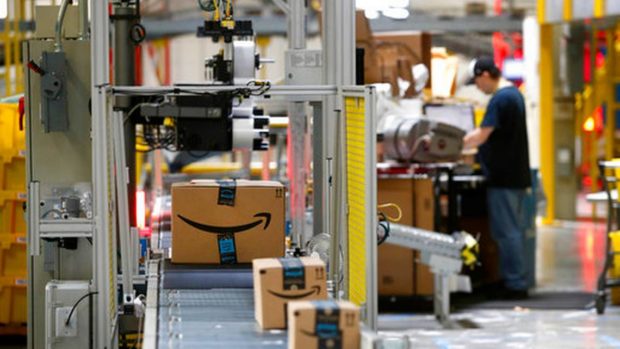
Amazon is 2nd US company to reach $1 trillion market value


NEW YORK — Amazon on Tuesday became the second publicly traded company to reach $1 trillion in market value, hot on the heels of iPhone maker Apple.

The milestone is another sign of Amazon’s swift rise from an online bookseller to a behemoth that sells toilet paper, TVs and just about anything. In its two decades, Amazon has expanded far beyond online shopping and into health care, advertising and cloud computing.

Its growth has boosted the fortunes of its founder and CEO, Jeff Bezos. His 16 percent stake in Amazon is now worth more than $160 billion. Forbes magazine placed him at the top of its list of billionaires for the first time this year, surpassing Microsoft co-founder Bill Gates and investor Warren Buffett.

Amazon’s stock has increased almost 600 percent in the last five years, including a more than 70 percent surge so far in 2018 alone. On Tuesday morning, the stock climbed enough to push the company’s valuation pass the $1 trillion mark, although it dropped back slightly after that. The stock closed at $2,039.51 Tuesday, about $11 short of keeping its valuation above $1 trillion.

Apple topped the $1 trillion mark in early August. Saudi Arabia’s national energy company, Aramco, is widely believed to be worth much more than either Amazon or Apple.

Amazon’s growing power has made it a target of politicians. President Donald Trump has said the company should pay the U.S. Postal Service more in shipping costs. And U.S. Senator Bernie Sanders has frequently noted the disparity between what Amazon’s warehouse workers make and Bezos’ vast fortune. Amazon has remained publicly silent about Trump’s criticism, but has called Sanders’ comments “misleading.”

Bezos started Amazon after leaving a hedge fund in 1994. He called Amazon the “Earth’s biggest bookstore” at the time, but it quickly added more products and eventually opened up a marketplace where others could list and sell their goods.

Amazon has cemented customer loyalty through its Prime membership program, offering fast, free shipping as well as music and video streaming perks. In April, Bezos disclosed for the first time that Amazon had more than 100 million paying Prime members around the world.

Wall Street has become very enthusiastic about Amazon’s businesses outside of retail. Amazon Web Services provides cloud computing services to companies and governments, and Amazon’s advertising division makes billions by selling ads to companies that want their products to show up when shoppers search on the site.

Those profitable businesses have helped offset the high costs associated with running its online store. Amazon saw its quarterly profit soar past $2 billion for the first time earlier this year as the online shopping, cloud computing and advertising businesses all kept growing.

Amazon is also building its physical presence: Its purchase last year of the Whole Foods grocery chain gave it hundreds of stores at which to promote its gadgets and offer discounts tied to Prime memberships. It has opened more than a dozen brick-and-mortar bookstores, and has plans for more cashier-less Amazon Go convenience stores.

It’s also been trying to have more control over how its packages are delivered. Under a program announced this summer, contractors around the country can launch businesses that deliver Amazon packages. The move gives Amazon more ways to ship its packages to shoppers without having to rely on UPS, FedEx and other delivery services.

Amazon’s latest push has been in the health care industry. It has formed a venture with JPMorgan Chase and Berkshire Hathaway to figure out ways to attack rising health care costs for their U.S. employees and possibly for many more Americans. It also announced plans to buy the online pharmacy PillPack, but hasn’t revealed what it plans to do with it.

source: business.inquirer.net

Thursday

Asian stocks recover after news of US-China trade talk


Asia stocks opened sharply lower on Thursday, joining a global sell-off on concerns over Turkey’s financial crisis but later pared losses on news that China and the US would hold trade talks.

Equities across the region suffered steep losses at the opening bell, with Tokyo and Shanghai off by more than one percent, dragged down by a weak session on Wall Street as traders fretted over possible contagion from Turkey’s currency crisis.

Japan’s main Nikkei 225 index shed 1.20 percent in early trade and China’s benchmark Shanghai Composite was off by 1.17 percent after another day of volatile trading driven by Turkey.


On Wednesday, Ankara hiked tariffs on imports of several US goods in retaliation for American sanctions, the latest step in a tit-for-tat spat between the two NATO allies that shows little sign of easing.

The crisis has sent the Turkish currency into free-fall and sparked concerns that European banks and other emerging markets exposed to the unit could also suffer.

A bearish mood saw European markets close down nearly two percent and the broad US S&P 500 market off by nearly one percent.

However, the lira managed to claw back some ground after losing just under a quarter of its value on Friday and Monday, a loss that had prompted fears of a fully-fledged economic crisis in the critical emerging economy.

And equities in Asia staged a fightback after news hit the wires of upcoming talks between the US and China, currently embroiled in a trade spat that economists warn could harm the global economy.

China’s Vice Commerce Minister Wang Shouwen, the deputy representative on international trade negotiations, will meet with a senior US treasury official, David Malpass, at the invitation of the United States, the ministry in Beijing said in a statement.

Traders saw a glimmer of hope of a detente in the ongoing trade battle that has seen the two sides hit each other with reciprocal tariffs on goods worth $34 billion, with much more threatened.

The two countries plan to launch a new round of tariffs on $16 billion worth of goods from each country on August 23.


“It is hard to tell how the talks will go but it’s a positive signal that the two countries are looking for some compromise plan,” said Makoto Sengoku, market analyst at Tokai Tokyo Research Institute.

“If they were determined to fight it out, they wouldn’t meet,” he told AFP.

A few hours into the trading session, the Nikkei was back in positive territory while markets in China and Hong Kong had almost erased all of their losses.

Key figures around 0300 GMT 

Dollar/Turkish lira: STABLE at 5.98 lira

Euro/dollar: UP at $1.1381 from $1.1349

Pound/dollar: UP at $1.2720 from $1.2700

Dollar/yen: UP at 110.86 from 110.73 yen

Tokyo – Nikkei 225: UP 0.01 percent at 22,206.66

Hong Kong – Hang Seng: DOWN 0.1 percent at 27,290.26

Shanghai – Composite: DOWN 0.2 percent at 2,716.31

Oil – Brent Crude: UP 45 cents at $71.21 per barrel

Oil – West Texas Intermediate: UP 14 cents at $65.15 per barrel

New York – Dow Jones: DOWN 0.5 percent at 25,162.41 (close)

London – FTSE 100: DOWN 1.5 percent at 7,497.87 (close)

/vvp

source: business.inquirer.net

Trade tensions torpedo oil, US sanctions hammer Russian rouble


SYDNEY — Asian shares were subdued on Thursday after a new round of tit-for-tat tariffs in the US-Sino trade conflict torpedoed oil prices, while the Russian rouble tumbled as the US slapped fresh sanctions on the country.

MSCI's broadest index of Asia-Pacific shares outside Japan barely budged as caution dominated. Japan's Nikkei slipped 0.5 percent, not helped by a shock slump in core machinery orders.

Early Thursday, China's state broadcaster said China must counteract US tariffs and Beijing had the confidence to protect its own interests as well as the means to do so.

China had already announced additional tariffs of 25 percent on $16 billion worth of US imports from fuel to autos. The tariffs will apply to billions of dollars in U.S. gasoline, diesel and other oil products, though not crude.

Analysts at ANZ noted there were also reports President Xi Jinping had asked China's major oil companies to increase domestic output to safeguard the country's energy security.

The oil market took the news hard with selling escalating as major technical levels broke.

US crude was last down 12 cents at $66.82 per barrel, having shed 3.2 percent on Wednesday, while Brent was off 2 cents at $72.26.

On Wall Street, trade-sensitive industrial companies were the biggest drag on the Dow, with declines led by Boeing and Caterpillar Inc.

The Dow fell 0.18 percent, while the S&P 500 lost 0.03 percent and the Nasdaq added 0.06 percent.

More sanctions

In currency markets, the Russian rouble sank after Washington said it would impose fresh sanctions because it had determined that Moscow had used a nerve agent against a former Russian agent and his daughter in Britain.

There were also reports of a new US Senate bill that would impose widespread sanctions on Russia for election meddling.

The rouble duly slid to its lowest since late 2016, with the dollar buying 65.50 roubles having jumped 3.4 percent overnight.

The pound skidded to its lowest against the dollar and euro in almost a year as fears grew Britain might leave the EU without a deal on trade with Brussels.

Traders reported a significant increase in investors hedging against a 'no-deal' Brexit, an event which could send sterling into free fall and hurt the economy by raising trade barriers with the UK's biggest export market.

Sterling was last trading at $1.2877, having dropped 0.4 percent overnight.

The Japanese yen seemed to be catching a bid as a traditional safe haven, with the dollar easing to 110.81 yen after stretching as high as 111.44 on Wednesday.

The euro was relatively steady at $1.1611, while the dollar index was a shade firmer at 95.098.

The New Zealand dollar shed 0.9 percent to a two-year trough at $0.6682 after the country's central bank took a dovish turn, pledging to keep rates at record lows well into 2020.

The Reserve Bank of New Zealand (RBNZ) said rates were likely to be on hold for longer and cut its forecasts for economic growth this year and next. —Reuters

Friday

Most Asian markets rise as 2018 rally extends


The equity rally that has kicked off 2018 continued on Friday, with Asian markets picking up the baton from another set of records on Wall Street.

Dealers are now turning their attention to the release later in the day of key US jobs data, which is expected to show the world’s top economy continuing to improve.

A forecast-smashing reading Thursday on private take-ups boosted optimism, which had already been bolstered by US tax cuts, healthy corporate profits and strong manufacturing figures from around the world.

Global markets powered ahead in 2017 as economies showed long-running improvements after years of faltering.

Greg McKenna, chief market strategist at AxiTrader, said in a note that data from the manufacturing and services sectors “suggests economic strength across the globe remains robust”.

He noted that an index of world factory activity was at its highest level in seven years.

On Wall Street, the Dow ended above 25,000 for the first time, leading records across Wall Street.

In Tokyo, the Nikkei ended up 0.9 percent at a 26-year high following its more than three percent jump Thursday, while Sydney added 0.7 percent.

Seoul rose 1.3 percent, with dealers buoyed by news that North Korea had accepted the South’s offer of talks next week, further easing geopolitical tensions in the region.

Hong Kong gained 0.3 percent to chalk up a ninth-straight gain, while Shanghai closed 0.2 percent higher but Singapore eased 0.2 percent.

Pause in oil?

While oil prices inched down in Asia, they remain elevated after recent rises to around three-year highs thanks to Middle East tensions, while the US sees stockpiles fall as it is hit by a severe cold snap.

The latest gains have given impetus to petroleum-linked firms, sending them rallying this week. In Hong Kong, Sinopec was up more than one percent while CNOOC and PetroChina were also higher. Woodside Petroleum in Sydney was up along with Santos, though Tokyo-listed Inpex eased.

However, Ric Spooner, a Sydney-based analyst at CMC Markets, told Bloomberg News: “There’s been a one-way, very steep and uninterrupted rally off the last minor low in mid-December near $56, so it won’t be surprising to see a pause here.”

On forex markets, the dollar rose slightly against the euro, but the single currency remains buoyant with the eurozone continuing to improve, which raises the chances of a reduction in the region’s massive stimulus programme, bringing monetary policy in line with the Federal Reserve.

McKenna added: “It’s again the story of a weaker US dollar as the fact its data is solid and improving is lost on traders focused on expectations that the EU strength will drive the European Central Bank to chase the Fed, and that synchronised global growth will, in fact, drag most central banks along the tightening path.”

In early European trade, London was flat, Paris rose 0.3 percent and Frankfurt added 0.4 percent.

source: business.inquirer.net

Tuesday

Wall Street retreats from record as industrials, tech lag


NEW YORK - U.S. stocks declined on Monday as each of the major Wall Street indexes retreated from a record, weighed down by a drop in technology and industrial shares.

General Electric, down 6.3 percent, suffered its biggest one-day percentage decline in more than six years after a host of brokerages cut their price targets on the stock, citing higher chances of a dividend cut at the industrial conglomerate.

After holding near the unchanged mark for most of the session, losses accelerated late in the session on downturn in technology, off 0.40 percent.

Last week, the Dow and S&P managed to close at a record high all five days, after a strong start to third-quarter earnings and on hopes President Donald Trump's tax plans move forward after the Senate's approval of a budget resolution on Friday.

"On the one hand, the market is very extended, overbought, on the other hand so far earnings have come through," said Andrew Slimmon, portfolio manager at Morgan Stanley Investment Management in Chicago.

"The question becomes what happens if tax reform doesn’t happen in 2017, does the market sell off into the year-end?"

Investors are also waiting for news on the next Federal Reserve chief. Trump told reporters on Monday he is "very, very close" to making his decision on who should chair the Fed.

Of the 97 S&P 500 companies that have reported earnings so far, 73.2 percent have topped expectations, according to Thomson Reuters data, versus the 72-percent average for the past four quarters.

The Dow Jones Industrial Average fell 54.25 points, or 0.23 percent, to 23,274.38, the S&P 500 lost 10.19 points, or 0.40 percent, to 2,565.02 and the Nasdaq Composite dropped 42.23 points, or 0.64 percent, to 6,586.83.

Industrials, were off 0.8 percent as one of the biggest drags to the S&P of the 11 major sectors. Aside from GE, the group was also pulled lower by a 10.4-percent tumble in Arconic after the specialty metals maker missed profit estimates and announced a new chief executive.

The energy index stumbled 0.59 percent, driven by losses in Schlumberger, Baker Hughes and Halliburton, which reported results on Monday.

Hasbro plunged 8.6 percent after the toymaker's forecast for the holiday season fell below estimates as Toys'R'Us bankruptcy began to hurt its operations. Shares of peer Mattel fell 3.2 percent.

The S&P 500 posted 91 new 52-week highs and 6 new lows; the Nasdaq Composite recorded 104 new highs and 41 new lows.

About 5.84 billion shares changed hands in U.S. exchanges, compared with the 5.83 billion daily average over the last 20 sessions. — Reuters

Wednesday

Wall Street ends flat after Yellen; tech shares bounce


NEW YORK - The S&P 500 ended flat on Tuesday and the Nasdaq posted modest gains as technology shares bounced from sharp losses in the prior session and comments from Fed Chair Janet Yellen boosted expectations of a December rate hike.

Yellen said the Fed needs to continue gradual rate hikes and it would be imprudent to leave rates on hold until inflation reached the Fed's 2-percent target.

Earlier in the session, Atlanta Fed Chief Raphael Bostic, a non-voting member this year, said he would want "clear evidence" that prices were firming before committing to another rate increase, but did not rule out another hike in 2017.

Chances of a rate hike in December rose to 78 percent from about 40 percent a month ago, according to CME Group's FedWatch tool.

"Investors should be looking out for a December hike given we don’t know what happens to the Fed chair position next year. (Yellen), probably wants to be able to, knowing anyone new in that role might not feel comfortable tightening the first month," said Jack Ablin, chief investment officer at BMO Private Bank in Chicago.

Economic data showed U.S consumer confidence fell in September while home sales dropped to an eight-month low in August due to the impact of Hurricanes Harvey and Irma.

The Dow Jones Industrial Average fell 10.05 points, or 0.05 percent, to 22,286.04, the S&P 500 gained 0.23 points, or 0.01 percent, to 2,496.89 and the Nasdaq Composite added 9.57 points, or 0.15 percent, to 6,380.16.

Technology, up 0.4 percent, was the best performing major sector, recovering somewhat from losses in the prior session. Tech shares suffered their worst one-day drop in five weeks on Monday as concerns over tensions with North Korea prompted investors to book profits in what has been the best performing sector this year.

Apple rose 1.72 percent after four straight sessions of losses to help prop up the three major indexes, after Raymond James boosted its price target on the iPhone maker to $180 from $170.

"It is a little bit of a relief knowing perhaps investors still believe in buying the dips even after the Fed’s announcement of reduced balance sheet purchases," said Ablin.

President Donald Trump warned North Korea any U.S. military option would be "devastating" for Pyongyang, but said the use of force was not Washington's first option to deal with the North's ballistic and nuclear weapons program.

Darden Restaurants slumped 6.53 percent after the Olive Garden parent said it expected the negative effects on sales and earnings from Hurricane Irma to be about double that from Hurricane Harvey.

Red Hat rose climbed 4.09 percent after the Linux distributor's quarterly profit came in above estimates and the company raised its full-year forecast.

Advancing issues outnumbered declining ones on the NYSE by a 1.31-to-1 ratio; on Nasdaq, a 1.35-to-1 ratio favored advancers.

About 5.81 billion shares changed hands in U.S. exchanges, compared with the 5.96 billion daily average over the last 20 sessions. — Reuters

Tuesday

Asian shares droop, yen gains as Korean tensions rise


TOKYO - Asian shares slumped on Tuesday while the dollar remained off recent highs against the yen against the backdrop of rising tensions on the Korean Peninsula.

North Korea's foreign minister said on Monday that a weekend tweet by President Donald Trump counted as a declaration of war on North Korea and that Pyongyang reserved the right to take countermeasures, including shooting down US bombers even if they are not in its air space.

MSCI's broadest index of Asia-Pacific shares outside Japan was down 0.2 percent in early trade, following losses on Wall Street.

Australian shares were up 0.1 percent, while South Korean shares were 0.3 percent down.

Japan's Nikkei stock index sagged 0.2 percent, pressured by a stronger yen.

"In addition to North Korea, the stronger yen is affecting shares today, and there's also Apple's poor performance, after the report that it told suppliers to reduce parts shipments," said Norihiro Fujito, senior investment strategist at Mitsubishi UFJ Morgan Stanley Securities.

Apple Inc shed 0.9 percent on Monday after it was reported the company had told suppliers to scale back shipments of parts for its upcoming iPhone X.

The dollar was slightly down against the yen at 111.70 and well shy of last week's two-month high of 112.725.

The yen tends to benefit during times of risk aversion due to Japan's net creditor status and the expectation that Japanese investors would repatriate assets when facing a crisis.

The euro edged up after tumbling on Monday following a severely diminished election victory for German Chancellor Angela Merkel that was accompanied by a surge in support for the far right.

Support for Merkel's conservatives unexpectedly slumped to its lowest since 1949 and the Social Democrats, partners in the outgoing coalition, said they would go into opposition.

The single currency was 0.1 percent higher at $1.1856 , while the dollar index, which tracks the greenback against a basket of six major rivals, was down 0.1 percent at 92.601.

Later on Tuesday, Federal Reserve Chair Janet Yellen is scheduled to speak on "Prospects for Growth: Reassessing the Fundamentals" at 1645 GMT.

On Monday, New York Fed President William Dudley said the US central bank is on track to gradually raise rates given factors depressing inflation are "fading" and the US economy's fundamentals are sound.

But Chicago Fed President Charles Evans said the Fed should wait until there are clear signs of faster wage and price growth before hiking rates again.

Crude oil prices gave back some of their gains after soaring more than 3 percent on Monday, with Brent hitting its highest in more than two years. Major producers said the global market was on its way to rebalancing, while Turkey threatened to cut oil flows from Iraq's Kurdistan region to its ports.

US crude eased 0.2 percent to $52.12 a barrel, after touching its highest levels since April on Monday. Brent crude edged up 0.1 percent to $59.10, after scaling its highest peak overnight since July, 2015. —Reuters

Saturday

Wall Street edges up, shaking off healthcare, North Korea worries


NEW YORK - The S&P 500 closed slightly higher on Friday even though Apple was a drag, as worries about Washington's latest healthcare legislation proposal eased and investors shrugged off concerns about North Korea.

Investors in the broader market were also encouraged by a jump in the Russell 2000 small-cap index, which ended with a record high close.

After a volatile day the S&P's healthcare sector ended 0.1 percent higher as insurance stocks regained ground after Republican Senator John McCain said he opposed his Republican peers' latest effort to replace President Barack Obama's healthcare law.

The S&P technology sector managed to eke out a small gain as investors had more appetite for risk even with a decline of 1 percent in Apple shares on muted reactions to the iPhone maker's latest product launch.

"The removal of the healthcare overhang, the fact the North Korea market impact is dwindling and the move in the Russell 2000 has all the smart investors thinking that the grind higher continues," said Michael Antonelli, managing director, institutional sales trading at Robert W. Baird in Milwaukee.

The Dow Jones Industrial Average fell 9.64 points, or 0.04 percent, to 22,349.59, the S&P 500 gained 1.62 points, or 0.06 percent, to 2,502.22 and the Nasdaq Composite added 4.23 points, or 0.07 percent, to 6,426.92.

Some investors moved to safe-haven assets such as gold, after North Korea said it might test a hydrogen bomb over the Pacific Ocean in response to U.S. President Donald Trump's threat to destroy the reclusive country.

But others felt that the market would cope with the ongoing stand-off between the countries, which has been ratcheting up in recent months. "If you cry wolf enough it loses its impact in the end," Antonelli said.

Five of the 11 major S&P sectors ended the day lower and utilities led the decliners with a 0.7 percent loss. After falling as much as 0.5 percent, the healthcare sector ended 0.08 percent higher.

Earlier in the day concern about the Graham-Cassidy healthcare bill had wreaked havoc with insurers' stocks. UnitedHealth closed down 1.1 percent after falling as much as 3.6 percent earlier in the day.

The small telecom services index, with only four stocks, was the biggest percentage gainer with a 1.4 percent rise on consolidation speculation while the energy index rose 0.5 percent as oil futures settled higher.

T-Mobile gained 1 percent after Reuters reported that the cellphone network operator was close to agreeing tentative terms on a deal to merge with Sprint, whose shares jumped 6.1 percent.

The report also pushed up bigger rivals Verizon Communications and AT&T Inc, which could benefit from having one less competitor.

Advancing issues outnumbered declining ones on the NYSE by a 1.82-to-1 ratio; on Nasdaq, a 1.91-to-1 ratio favored advancers.

About 5.26 billion shares changed hands on U.S. exchanges compared with the 6.03 billion average for the last 20 sessions. — Reuters

Wednesday

Wall Street edges higher; US Fed meeting in focus


The three major U.S. stock indexes edged higher on Tuesday, logging closing records, with financial stocks providing the biggest boost a day ahead of the Federal Reserve's concluding statement from its two-day policy meeting.

The U.S. central bank is expected to announce when it will begin paring its bond holdings, and while a September interest rate increase is not expected, investors will closely study Fed Chair Janet Yellen's views on inflation for clues whether the Fed will raise rates in December.

"It seems the market is holding its breath and waiting for what the Fed has to say regarding the economy and any future interest rate hikes," said Ryan Detrick, senior market strategist for LPL Financial.

"The market could throw a little bit of a fit if they push (balance sheet reduction) back. It could hurt financials and the overall market might not like the uncertainty," he added.

Six of the 11 major S&P sectors closed higher, with the financial sector's 0.8 percent gain providing the biggest boost. The sector has risen in seven of the last eight sessions, clocking a 6 percent rise in that time.

If the Fed reduces its balance sheet, investors are betting that would lift yields for longer-term treasuries, which could boost bank profits, Detrick said.

The Dow Jones Industrial Average rose 39.45 points, or 0.18 percent, to 22,370.8, clocking its sixth straight record close. The S&P 500 gained 2.78 points, or 0.11 percent, to 2,506.65, hitting its fifth record closing high in the last six sessions.

The Nasdaq Composite added 6.68 points, or 0.1 percent, to 6,461.32, also squeaking out a record closing high, slightly above its Sept. 13 close.

The biggest percentage gain was the telecom services sector's 2.3 percent jump on merger and acquisition speculation.

The biggest U.S. telephone operators, Verizon and AT&T, rose more than 2 percent, providing the second- and third-biggest individual stock boosts for the S&P. Shares of smaller wireless carrier T-Mobile rose 5.9 percent and Sprint jumped 6.8 percent, following a report they were in active merger talks.

The healthcare index was one of the biggest laggards, with declines in insurers such as United Health , which fell 1.8 percent due to the latest efforts in Washington to overhaul Obamacare.

Best Buy fell 8 percent after the No. 1 U.S. electronics retailer forecast fiscal 2021 adjusted earnings well below Wall Street estimates. The stock was one of the biggest drags on the consumer discretionary index.

Tesla fell 2.6 percent after Jefferies started coverage of the electric car maker's stock with an "underperform" rating.

Advancing issues outnumbered declining ones on the NYSE by a 1.09-to-1 ratio; on Nasdaq, a 1.04-to-1 ratio favored advancers.

About 5.8 billion shares changed hands on U.S. exchanges. That compares with the 5.9 billion daily average for the past 20 trading days, according to Thomson Reuters data. — Reuters